Neon signs, which rose to popularity in America along with automobiles and highways, lit our future. Across the twentieth century and into the twenty-first, they have acted as beacons, drawing people toward their light and helping to shape our communities beneath their glow.
Unfortunately, much of what has been written both online and in print about the history of neon signs, is false. Worse still, it is often grounded in deliberate disinformation, disinformation now so long and so often repeated that it appears at first glance to be fact. My research, together with Paul Greenstein, has endeavored to correct the record, and to tell the real stories of how neon signs transformed the American landscape and have shaped our communities.
Together we authored Neon: A Light History, the first book about neon’s history to be grounded in rich, empirical research. Here I offer a brief timeline of some of neon’s milstones; the images used are from our book.
American Daniel McFarlan Moore developed the first commercial luminous tubing for indoor and outdoor illumination and for signs in the New York metropolitan area in the late 1890s. His first documented, successful commercial installation was at Theodor Marceau’s tony 5th Avenue portrait gallery in 1903.
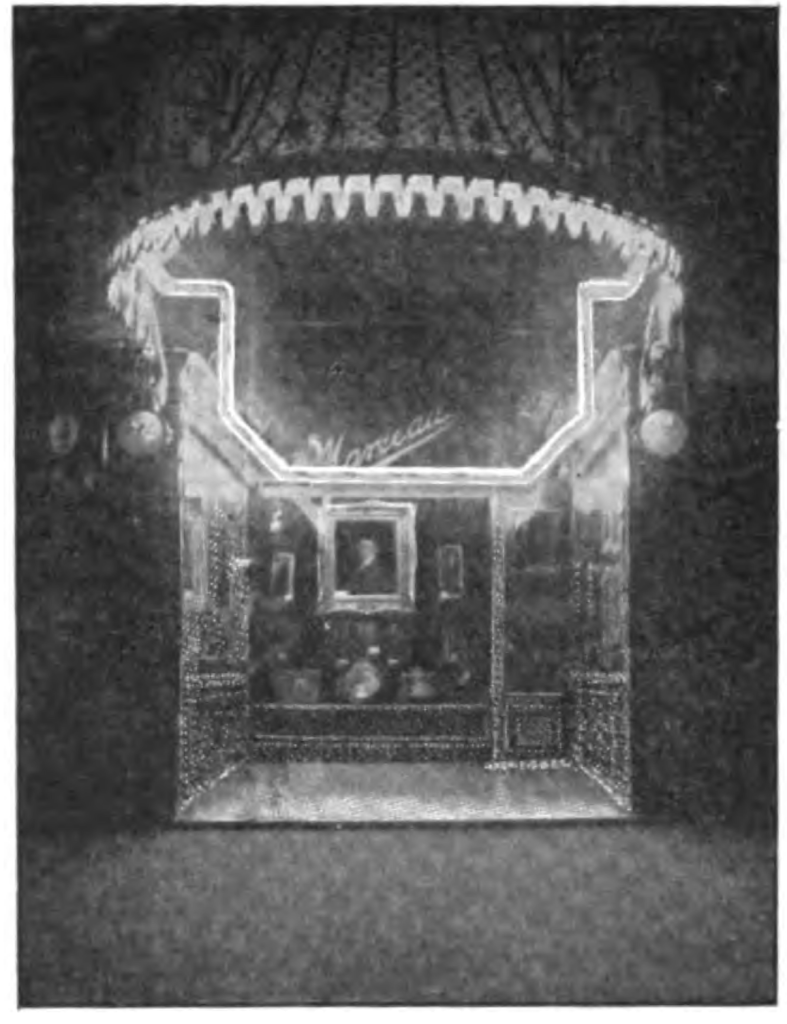
But neon gas had not yet been isolated from air, so Moore filled his tubing with reactive gases like nitrogen and carbon dioxide (which produced magnificent white light). In 1898 Sir William Ramsay and Morris Travers isolated neon gas for the first time, stunned by its bright orange-red light. But neon and the other noble gases, which are exceedingly rare as components of the air, would remain difficult to obtain for many years to come.
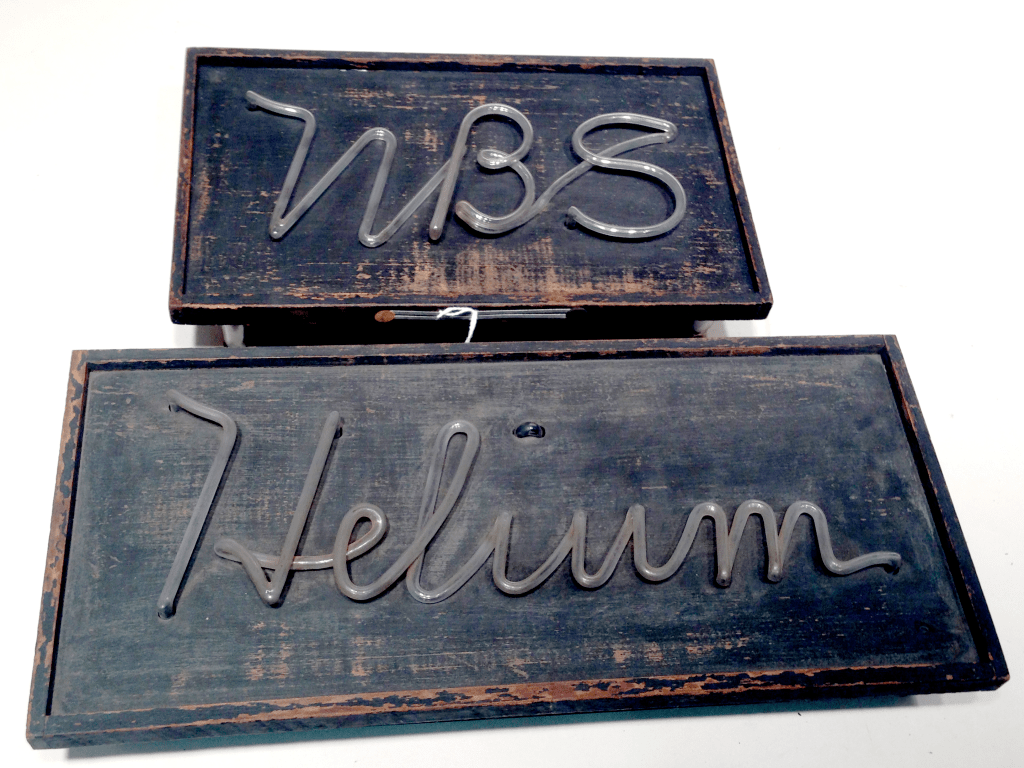
In 1909 physicist Perley J. Nutting and glass blower Edward O. Sperling of the US National Bureau of Standards made a series of experimental luminous-tube signs filled with noble gases and displayed them at the opening of their new building in the Spring of 1910. Two of these signs (reading NBS and Helium) survive today at the Smithsonian Institution. The glass tubing of a few others survives at the National Institute of Standards and Technology (NBS’s newer incarnation). These are the oldest luminous tube signs in existence anywhere in the world.
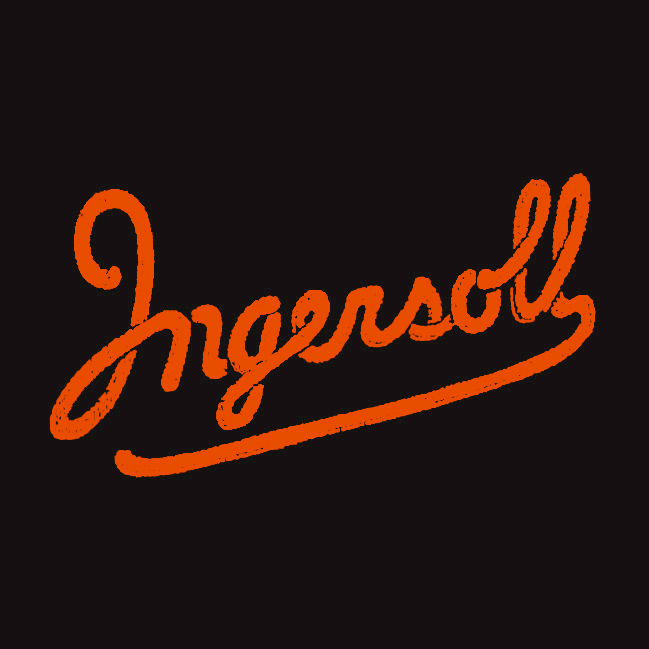
1909 also saw the creation of the first commercial luminous-tube sign filled with a noble gas: made by John Madine (who worked for Moore’s company in Berlin and there obtained neon gas) and Russel Trimble it spelled INGERSOLL in script letters of 8mm tubing filled with neon, and was used indoors by the Ingersoll Watch Company in Newark, New Jersey.
The man most sources credit with making the first neon signs and indeed of creating the neon-sign industry, Frenchman Georges Claude, did neither. Claude did not make his first neon installation until December of 1910, and then only by replacing CO2 in a Moore-tube installation. But Claude was adept at applying for patents and, after a five-year struggle obtained one in the US for electrodes used in luminous tubing. Claude and the companies to which he licensed this and other patents would go on to leverage that to crush competition and stiffle the flourishing neon industry for decades. In WWII Claude was an aggressive Nazi sympathizer and he was sentenced by the French government to life in prison for his collaboration.
Once we understand that what we now call neon signs began in the US, we can also realize that the widely circulated story that the first neon sign in the US was made by Claude in France and imported to the US by Earl C. Anthony for his Los Angeles Packard dealership in 1923. Anthony did in fact have a sign made by Claude, but our research using air photos revealed no sign there (on a billboard on the roof of a building at the corner of 7th and Flower) until 1925. Quite a bit too late to be first.
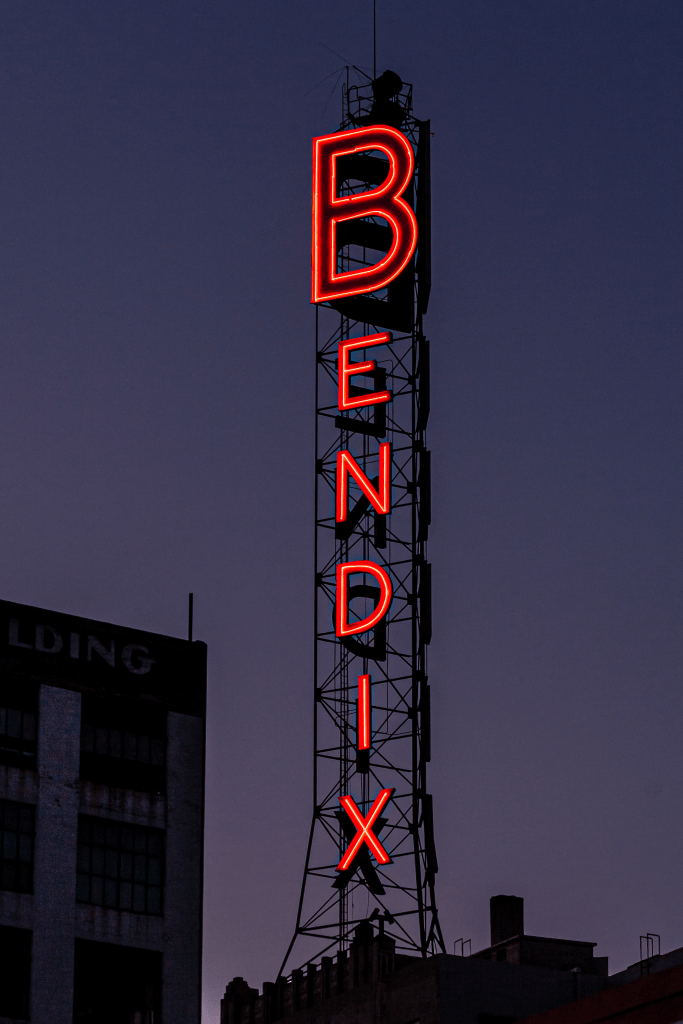
In fact, even before the Claude Neon Lights company had been incorporated in New York City in March of 1924, Raymond Machlett’s company Rainbow Light had already made some 450 signs in the New York area alone. Rainbow’s Los Angeles licensee, Neale, Inc (later Neale Rainbow Light) began making neon signs in that city in 1926 and erected some of Los Angeles’s most formidable neon installations, some of which still remain, such as the enormous rooftop Bendix sign downtown (from 1929; photo: Marc Evans Photography, 2008).
 Dydia DeLyser: scholar, writer, Geographer